SelfHosted Data Analytics
Tl;DR
No Hello is just the beginning of a proper Governance & Communication Operating System
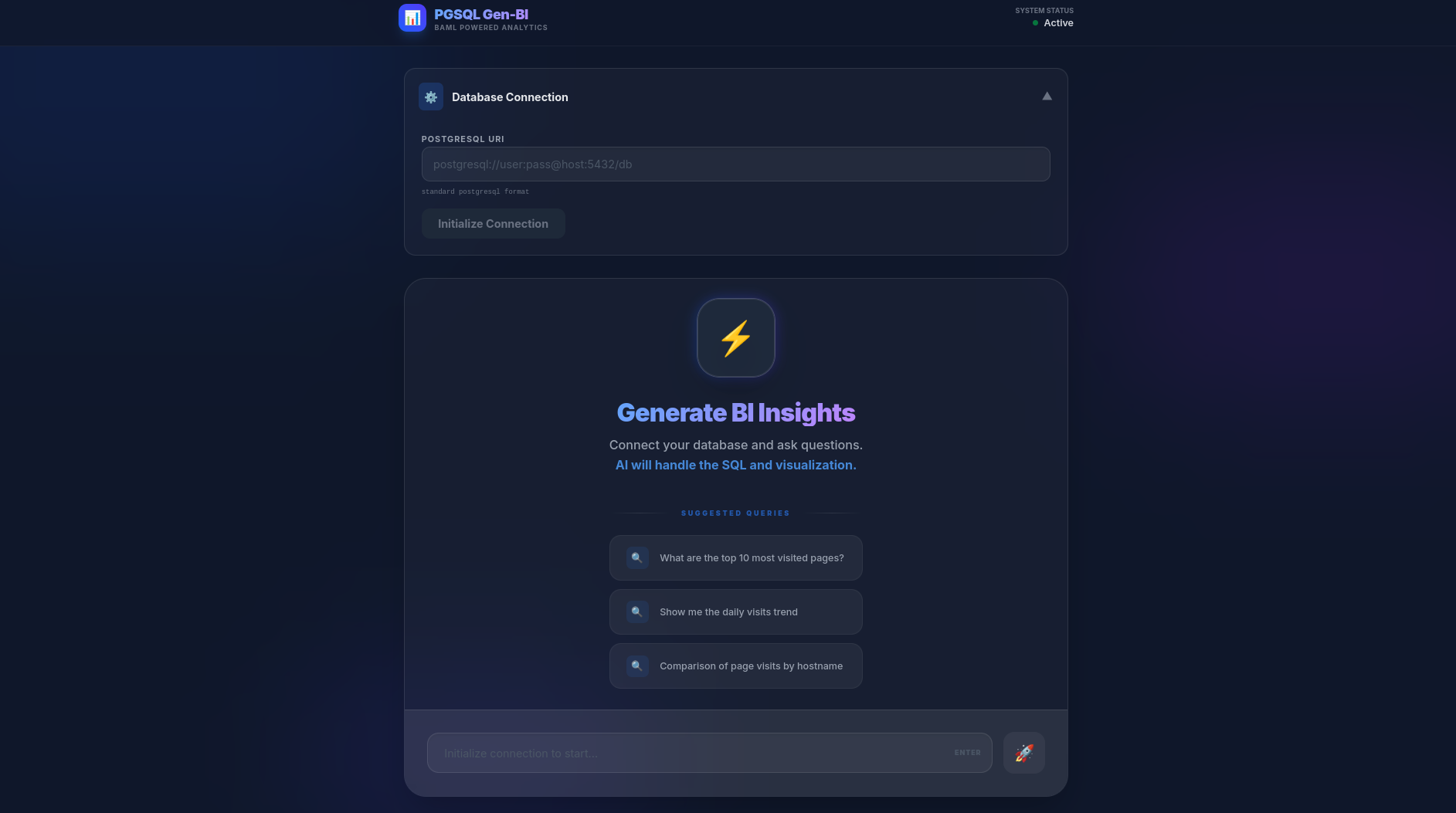
Intro
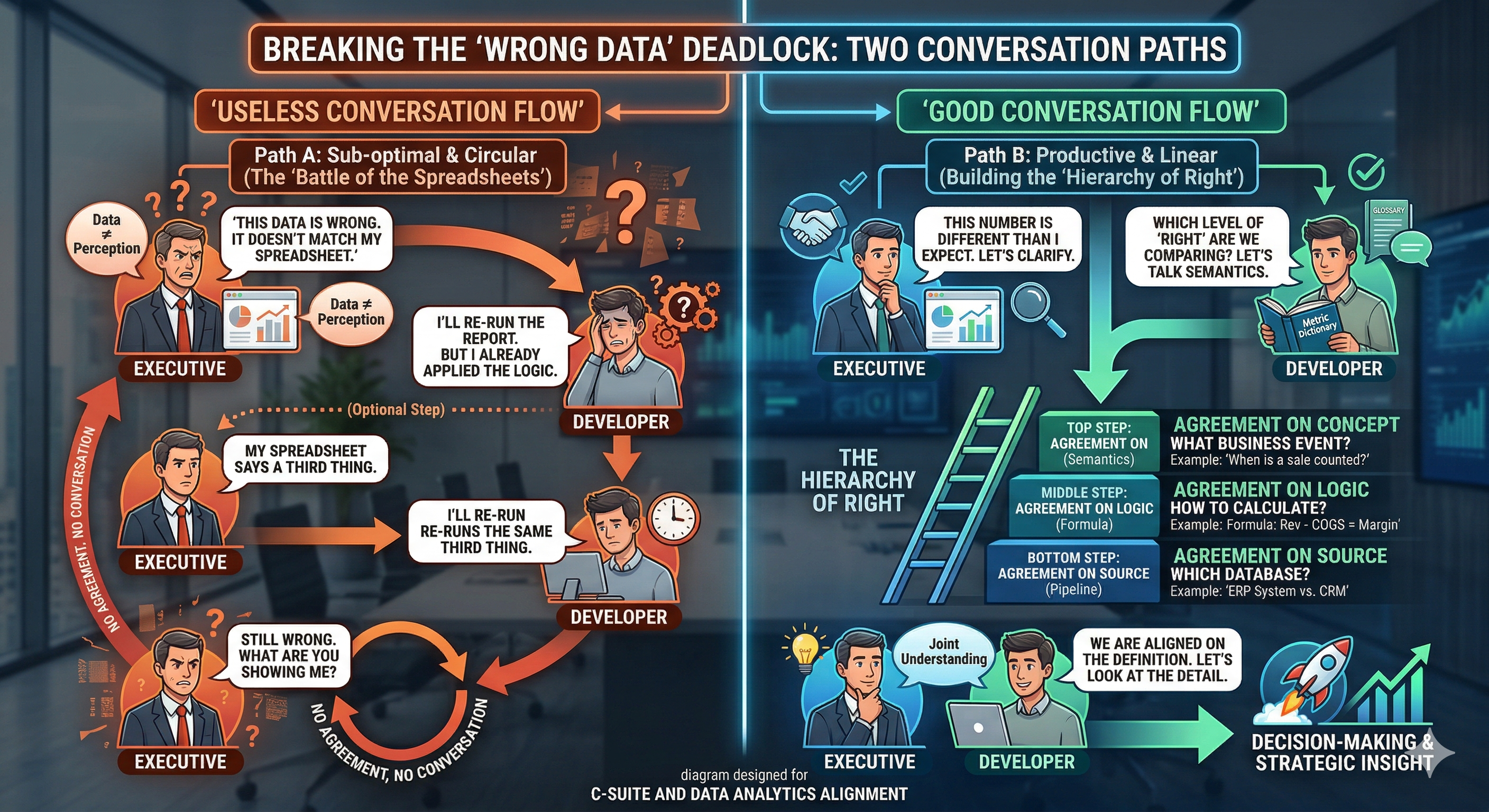
D&A is more about semantics than you could think in the first place:
Does the separation of facts, assumptions, your understanding, and the next validation step make sense for you? Because I have a framework to drive outcomes waiting for you
Get written semantic contracts before its too late and the preassure goes for you

JHub is great.
Is there anything else?
Data -> Decision -> Delivery
Speed matters, there are no excuses:
- Apache DevLake = DevOps/SDLC Analytics & Metrics
- Delta Lake = Data Storage Layer for Data Lakes
https://devlake.apache.org/docs/Metrics/DeploymentFrequency/
Your career might have started with MySQL and Dbeaver.
But thats just the beginning.
sudo docker compose -f ./z-homelab-setup/evolution/2610_docker-compose.yml logs -f whodbUse the DBCode extension, and if you like ipynb, check their notebooks for DBs
AI x Data
vanna-ai/vanna: 🤖 Chat with your SQL database 📊. Accurate Text-to-SQL Generation via LLMs using Agentic Retrieval 🔄.
Custom Chats
MIT | Typescript/React Library for AI Chat💬🚀
AI/BI Tools
Since the last time, chartbrew reached version 5:

I talked about Rill and WrenAI sometime back
Whats New
Rill vs WrenAI vs Vanna:
- Apache DevLake = DevOps/SDLC Analytics & Metrics
- Delta Lake = Data Storage Layer for Data Lakes
You can also try with Python Venvs or Conda
It doesnt matter if you stack is: powerbi+dbeaver+mssql/dbcode extensions at vscode…
SELECT TOP 10 * FROM INFORMATION_SCHEMA.TABLES;

SELECT [EaId], [Name], [LifecycleState]
FROM [Stg].[Snowflake]
WHERE [EaId] LIKE 'sth123%';Or the Grafana+Pypsark+graphite/ES one…
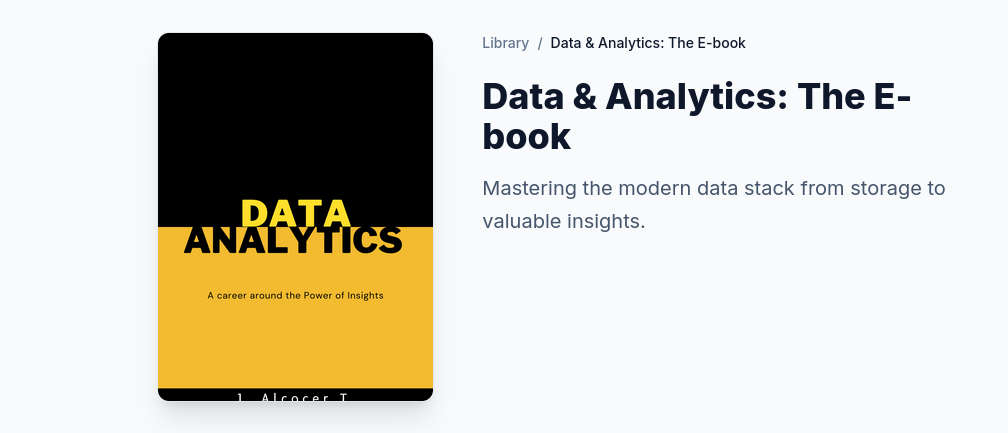
I got you covered on the D&A book
 Consulting Services
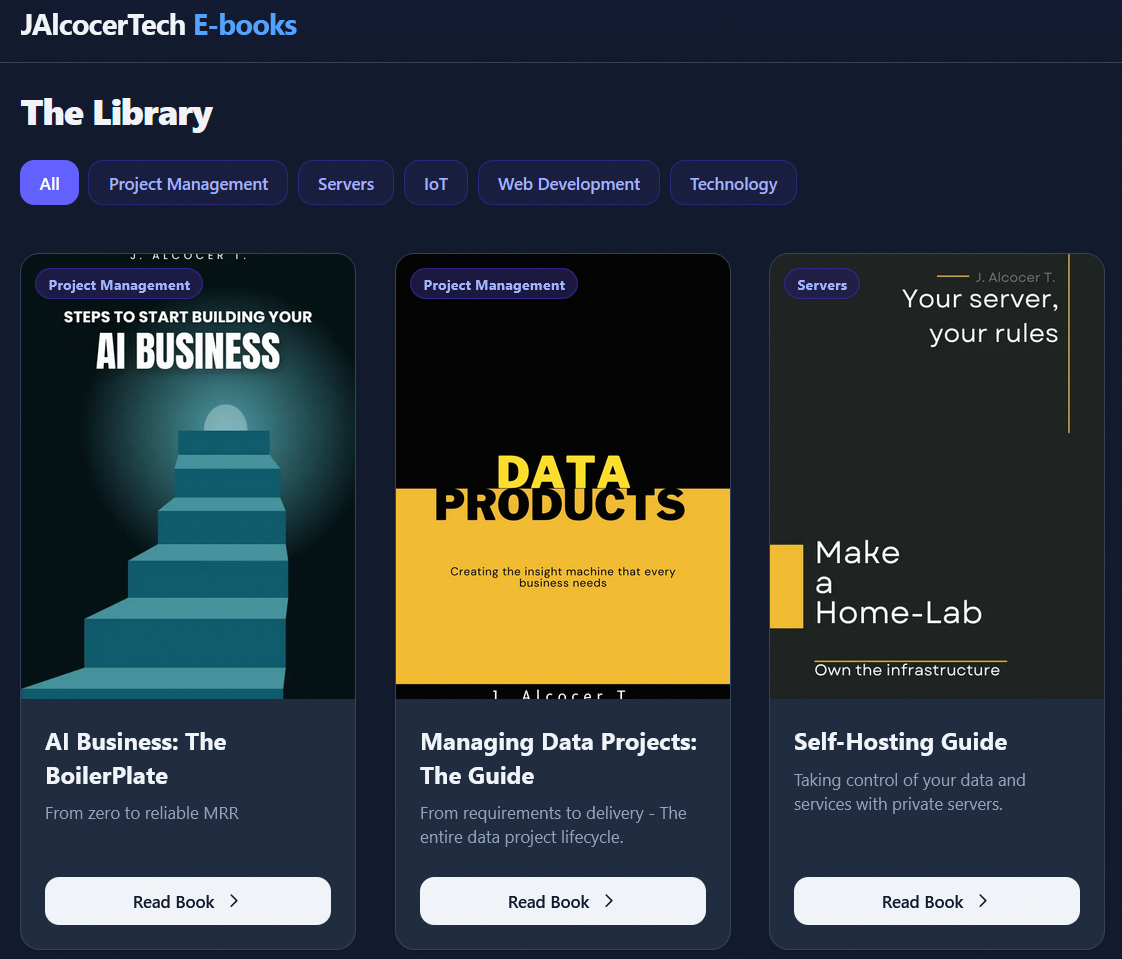 DIY via ebooks
Or if you are ready for that big next step, at the consulting ;)
Not all of them are 100% Open Source Software (OSS).
🟢 Fully Open Source (100% Free & OSS)
These tools are free for both personal and commercial use without “Pro” versions.
- MySQL Workbench: Licensed under GPL.
- HeidiSQL: Licensed under GPL; completely free.
- phpMyAdmin / Adminer: Both are fully open source web-based tools.
- Sequel Ace: A popular, fully open-source Mac alternative to Sequel Pro.
🟡 Open Core / Freemium (Free version + Paid version)
These have a free community version that is open source, but they sell a separate “Enterprise” or “Ultimate” version with extra features.
- DBeaver: The Community Edition is fully open source (Apache License). The Enterprise version (paid) adds support for NoSQL (MongoDB, etc.) and cloud integrations.
- Beekeeper Studio: The Community Edition is open source (GPL). The “Ultimate” version adds features like team workspaces and a specialized table creator.
🔴 Proprietary / Paid (With Free Tiers)
These are not open source. They are commercial products, though they may have free versions for specific users.
- TablePlus: Proprietary. It has a free trial, but it limits you to opening only 2 tabs/windows at a time.
- DataGrip: Proprietary (JetBrains). As of late 2025/early 2026, it is free for non-commercial use (students, hobbyists, open-source contributors), but requires a paid subscription for professional/work use.
- PowerBI Desktop: Proprietary (Microsoft). It is “Free to use” but is closed-source software.
Which should you choose?
- If you want maximum power for free: DBeaver Community is the winner.
- If you want something simple and truly OSS: HeidiSQL (Windows) or Beekeeper Studio Community.
- If you are on a Mac: Sequel Ace is a fantastic open-source native choice.
Agentic Orchestration Layer
The article says the Zvec team’s ecosystem roadmap targets integrations with:
- LangChain. marktechpost
- LlamaIndex. marktechpost
- DuckDB. marktechpost
- PostgreSQL. marktechpost
- “Real device deployments” (i.e., on-device / edge environments, not a specific framework, but mentioned as a target). marktechpost
They are essentially the “nervous system” for AI.
While a Large Language Model (LLM) acts as the “brain,” these Agentic Orchestration Layers provide the structure, memory, and routing logic required to turn a static model into a functional, autonomous agent.
However, they each approach “orchestration” from a very different architectural philosophy.
1. LangGraph (The “State Machine” Approach)
LangGraph is currently the industry favorite for complex, reliable agents.
Unlike standard LangChain (which is more linear), LangGraph treats an agent like a “cycle” or a flow chart.
- Philosophy: Everything is a Directed Acyclic Graph (DAG) or a state machine.
- Best for: Tasks where the agent needs to loop back, retry, or follow a very specific “plan-act-check” cycle.
- Key Feature: Built-in persistence (the agent can “sleep” and wake up exactly where it left off).
2. AutoGen (The “Conversation” Approach)
Born out of Microsoft Research, AutoGen views agentic work as a dialogue.
- Philosophy: You create a “team” of specialized agents (e.g., a “Coder,” a “Reviewer,” and a “Manager”) who talk to each other to solve a problem.
- Best for: Creative problem solving, multi-agent collaboration, and scenarios where agents need to critique each other’s work.
- Update: As of late 2025, Microsoft released the Microsoft Agent Framework, which converges AutoGen’s conversation patterns with Semantic Kernel’s stability.
3. Semantic Kernel (The “Enterprise” Approach)
This is Microsoft’s SDK for integrating AI into professional software (C#, Python, Java).
- Philosophy: It treats AI functions as “Skills” or “Plugins” that can be called by a central “Planner.”
- Best for: Large-scale enterprise apps where you need strict security, telemetry (logging), and integration with existing corporate APIs.
- Key Feature: It is “Strongly Typed,” making it much easier for traditional software engineers to use than the more “fluid” Python frameworks.
| Tool | Core Mechanism | Complexity | Best Use Case |
|---|---|---|---|
| LangGraph | Graphs / State Nodes | High | Robust, custom loops and specific workflows. |
| AutoGen | Agent Conversations | Medium | Dynamic “brainstorming” and multi-agent teams. |
| Semantic Kernel | Plugins / Planners | Enterprise | Production apps needing security and C# support. |
Where does standard LangChain fit?
In 2026, standard LangChain is often viewed more as a “utility belt” or a collection of connectors (to databases, PDFs, etc.).
Most developers use LangChain for the data and LangGraph for the logic.
The distinction you’ve highlighted regarding Semantic Kernel being “Kernel-centric” versus the “Chain” or “Graph” approach of the others is the most critical takeaway.
Semantic Kernel is the Microsoft orchestration powerhouse!
The “Logic” Evolution
Semantic Kernel’s “Planners”: In early versions, planners were a bit unpredictable. Now, they have matured into highly reliable “Function Calling” mechanisms. Instead of the LLM just guessing what to do, the Kernel provides a strict set of “Tools” (Plugins) that make it much safer for enterprise use.
LangGraph’s “Persistence”: Your mention of “Stateful workflows” is spot on. One of its biggest edges over Semantic Kernel for developers is “Human-in-the-loop” capability. You can pause a graph, wait for a human to approve a database edit, and then resume.
Integration Depth
Azure Native: If a company is already on the Azure OpenAI stack, Semantic Kernel is almost a “default” choice because it handles things like Managed Identities and Virtual Networks in a way that Python-centric frameworks often struggle with.
AutoGen’s “Code Interpreter”: AutoGen’s standout feature remains its ability to spin up a “Dockerized” environment where an agent can write Python code, execute it, see the error, and fix it—all without human intervention. This makes it the “smartest” for raw data science tasks.
Expanded Comparison Table
To add to your existing data, here is how they handle Memory and Tooling:
| Feature | Semantic Kernel | LangGraph | AutoGen |
|---|---|---|---|
| Memory Type | Specialized “Memories” (Vector DBs) | State snapshots (Checkpoints) | Chat History / Context windows |
| Tool Calling | “Plugins” (C# Classes/Methods) | “Nodes” (Python Functions) | “Skills” (Function calls) |
| Development Style | Software Engineering (OOP) | Flowchart / Logic Design | Social Engineering (Persona) |
Final Verdict
Your summary is perfect:
- Semantic Kernel = The “Boring” (in a good way) Enterprise Choice. It follows rules.
- LangGraph = The “Architect’s” Choice. It follows a map.
- AutoGen = The “Researcher’s” Choice. It follows a conversation.
- And…how about Google ADK?!
Fabric One Catalogue or…
If you have been using PowerBI, you know that there is this notion of data catalog
Well, OneLake Catalog is Microsoft’s answer to that need, and it’s built right into the Fabric ecosystem. learn.microsoft
This is why as part of your Data Strategy you should be thinking about semantics first and foremost.
Because the semantic layer is what makes sense of your data and allows you to make decisions based on it.
Plus…the hard tech part…is cooked for a while now
| File | Contents |
|---|---|
model.bim | Full semantic model — tables, Power Query (M) transformations, DAX measures, calculated columns, relationships, hierarchies |
report.json | Report layout — pages, visuals, positions, filters, slicers, bookmarks, field bindings |
diagramlayout.json | Visual positioning of tables in the model relationship diagram (cosmetic only) |
A
procedural.mdis all you might need to know everything you ever wanted frompbix.pbip powerbi dashboards
OneLake Catalog is a Microsoft Fabric feature—a centralized data discovery and governance tool within OneLake, Microsoft’s unified data lake (like “OneDrive for data”).
It helps users search, explore, and manage Fabric items like lakehouses, warehouses, reports, and pipelines across workspaces.
Key Features
It offers an Explore tab for browsing with filters (domains, tags, endorsements, item types), rich metadata (descriptions, schemas, lineage, permissions), and direct actions like querying or analyzing items.
The Govern tab (preview in some updates) provides data owners insights on quality, compliance, and recommended actions. blog.fabric.microsoft
Microsoft Fabric Context
Built into every Fabric tenant, it unifies multi-cloud data estates, integrates with Teams/Excel/Copilot, and supports APIs/CLI for devs—promoting trust, reuse, and security via endorsements and sensitivity labels.
It’s complementary to Purview for broader governance. learn.microsoft
Yes, that description is accurate. OneLake Catalog centralizes all Microsoft Fabric content for browsing, curation, and governance in one unified view. learn.microsoft
Coverage Details
It spans insight items (reports, dashboards), data items (lakehouses, semantic models, warehouses), process items (pipelines, notebooks), plus apps and more—accessible via Explore and Govern tabs with filters, metadata, lineage, and actions.
This matches official docs and demos exactly. blog.fabric.microsoft
Open-source alternatives to Microsoft Fabric (unified analytics) and OneLake Catalog (data governance/discovery) exist for building custom lakehouses with catalogs.
They prioritize vendor independence, lower costs, flexibility, and multi-cloud support over Fabric’s seamless Azure integration. peliqan
OSS Stack Alternatives
Combine storage + table format + catalog + query engine for Fabric-like functionality (data ingestion, lakehouse, governance). reddit
| Component | OSS Alternative | Why Better Than Fabric peliqan |
|---|---|---|
| Data Lake Storage | MinIO (S3-compatible) | Self-hosted, no egress fees, portable across clouds |
| Table Format | Apache Iceberg (or Delta Lake OSS) | ACID, schema evolution, time travel; multi-engine |
| Catalog | Nessie, Apache Polaris (incubating), Gravitino | Portable metadata/governance; no vendor lock-in dataversity |
| Query/Compute | Apache Spark, Trino, DuckDB | Decoupled scaling, OSS-native; cheaper than Fabric capacity units |
| Orchestration | Apache Airflow, NiFi | Custom pipelines; Fabric Data Factory alternative reddit |
| Full Platforms | Alluxio + Tabular, Openlake stack | Complete lakehouse; avoids proprietary OneLake shortcuts |
Why OSS? Cost savings (no per-compute fees), customization (e.g., Iceberg governance across Spark/Trino), no lock-in (use AWS S3/GCP/etc.), community velocity—ideal for advanced users like devs building micro-SaaS. Fabric suits quick Azure starts; OSS for long-term control.
What can happen with OSS?
That some project like minion say bye, but you can fork it and maintain it
or switching to an equivalent one: https://github.com/rustfs/rustfs
Apache v2 | 🚀2.3x faster than MinIO for 4KB object payloads. RustFS is an open-source, S3-compatible high-performance object storage system supporting migration and coexistence with other S3-compatible platforms such as MinIO and Ceph.
RustFS is a high-performance, distributed object storage system built in Rust.
Which of these would you use to analyze on chain data?
New Data Stack
DuckDB and MotherDuck
which btw can be integrated with perplexity connectors!
- https://www.ohansemmanuel.com/books/understanding-astro
- https://github.com/understanding-astro/understanding-astro-book/tree/master?tab=readme-ov-file
- https://understanding-astro-webook.vercel.app/
DuckDB as been very interesting.
Ive eben managed to plug it to langchain with a dummy db for a tech talk here.
And gen bi tools like Rill rely on it.
https://ducklake.select/manifesto/
which relates to rill gen bi andduckdb
https://www.youtube.com/watch?v=dJMqeKEtW6w
https://www.youtube.com/watch?v=dJMqeKEtW6w
https://www.youtube.com/watch?v=hrTjvvwhHEQ
https://www.youtube.com/watch?v=-PYLFx3FRfQ
https://motherduck.com/docs/getting-started/
Infrastructure for Answers
The data warehouse built for answers, in SQL or natural language.
I focused on articulating better my ideas, creating engaging presentations and authorated content.
Its all about nurturing the psyc aspect.
Conclusions
I said bye recently to the vasagle desk that has seen me grown in the D&A space these last years.
Also said bye to anystupid meetings thanks to my daily framework coming my way thanks to agents that you can feed with these productivity ideas
TL;DR: after every meeting, MoM with: WHO is going to do WHAT by WHEN
BLUF
Bottom line up front - Just another TL;DR!
The narrative and story lines are important to go sell and fund PoCs so that they become MVPs
For the day to day, elevate your operations to get more done:
Consulting ServicesDIY via ebooksFAQ
JSON, YML or TooN?
The MSSQL Extension for Visual Studio Code is designed to empower developers by providing a seamless and modern database development experience.
Our goal is to make SQL development more productive and intuitive by integrating essential features such as schema management, query execution, and AI-powered assistance.
Data Modelling Approaches
Yea…again.
- ER - 3NF - OLTP - normalized schemas: + tables, - redundancy
- Dimensional Modelling - OLAP - denormalized: + query speed but more space taken
trazability matrix, dependencies…
Soft Skills for D&As
These notes are useful, especially for D&A roles where the technical work is only half of the job.
A good analyst is not just someone who can find the issue.
The higher-impact analyst can explain what is known, what is still uncertain, who should own the next step, and what decision is needed.
You can think of this as a capability framework built on top of the no-hello movement.
“No hello” reduces conversational latency by putting the actual request in the first message.
This goes one level higher: choose the communication pattern that creates the next useful state.
Converging vs Non-Converging 📌
This connects three related ideas:
- No-hello prevents empty communication.
- Non-converging asking prevents vague, endless clarification loops.
- This capability framework turns communication into an outcome-producing system.
A non-converging ask usually sounds like:
Can we look into this?
Thoughts?
Can someone check?
Is this expected?
Those questions create motion, but not convergence. They often do not specify evidence, owner, decision, deadline, or acceptable next action.
A better pattern is:
I found X. I ruled out Y and Z. Current evidence points to A.
Can Team B confirm whether they own this upstream field mapping by Friday 12 PM?
If yes, we can proceed with Option 1. If not, I will reroute to Team C.
That maps directly to the framework:
- DFIR: what happened, what evidence exists, and what interpretation is likely.
- FACT: who the likely owner is and why.
- DRIVE: the request is easy to answer.
- COAST: there is an owner, status, and trigger.
- ADAPT: if a decision is needed, options are framed.
So yes: this section is also about making asks converge.
A good analyst does not just “raise visibility”; they reduce ambiguity until the next action becomes obvious.
Converging is good when the goal is execution, but risky when the goal is still sense-making.
| Situation | Better mode | Why |
|---|---|---|
| Bug triage, RCA, ownership handoff, approval, release blocker | Converge | You need facts, owner, decision, and next action. |
| Discovery, strategy, architecture exploration, product direction, unclear problem framing | Diverge first, then converge | Premature closure can hide better options or wrong assumptions. |
| Stakeholder conflict, ambiguous business ask, unclear metric definition | Clarify / frame | The real problem may be semantic, political, or organizational rather than technical. |
The danger is not convergence itself. The danger is converging too early.
For D&A, this matters a lot. If the dashboard number is “wrong”, you should converge on evidence.
But if the question is “what should this metric mean for the business?”, converging too quickly can lock in a bad semantic contract.
Good stakeholder communication is not always about converging immediately.
It is about knowing when to diverge for context, when to clarify meaning, and when to converge into ownership, decision, and action.
Stakeholder Leadership Toolkit
The point of the toolkit is simple: help mid-level analysts move from reporting problems to driving outcomes.
Most professional communication should not be optimized for sharing information.
It should be optimized for creating an outcome.
Before sending an email, scheduling a sync, or opening a ticket, ask:
What specific outcome am I trying to create, and what communication pattern does it require?
Stakeholder Maturity Model
| Level | Role | Core communication profile |
|---|---|---|
| L1 | Junior analyst | Reports issues, escalates quickly, and focuses mostly on isolated technical findings. |
| L2 | Mid-level analyst | Investigates before escalating, identifies correct owners, facilitates discussions, and produces evidence-based recommendations. |
| L3 | Senior analyst | Drives alignment across teams, frames business decisions, anticipates stakeholder concerns, and creates clear execution plans. |
| L4 | Lead / Principal | Shapes strategy, resolves organizational ambiguity, influences without authority, and builds repeatable operating models. |
Anti-Patterns vs Better Framing
| Anti-pattern | Better framing |
|---|---|
| “I found an issue.” | “I investigated the issue, ruled out X and Y, and believe Z is the most likely cause based on our logs.” |
| “Can we discuss this on a call?” | “The decision required is whether we should adopt Option A or Option B. I have mapped the trade-offs below.” |
| “This other team needs to fix it.” | “Based on the lineage mapping, Team X is the logical owner because they manage the upstream ingestion layer.” |
| “There is missing data.” | “Current evidence suggests a lineage mismatch rather than missing source data. I have outlined the discrepancy here.” |
Six Stakeholder Communication Patterns
Use these patterns depending on the business situation.
The goal is to make the communication shape match the outcome you need.
- Investigation: DFIR
Use this for root cause analysis, data discrepancies, bug investigation, stakeholder concerns, RCA documents, and executive questions about reported issues.
| Element | Meaning |
|---|---|
| Discover | Observation |
| Facts | Evidence and findings |
| Interpretation | Root cause and business interpretation |
| Recommendation | Decision required and recommended action |
Outcome created: shared understanding of reality before ownership, fixes, or priorities are discussed.
Typical deliverables: RCA documents, investigation summaries, Jira bug analysis, stakeholder updates, and executive briefings.
Goal: establish a single source of truth before proposing solutions.
What good looks like: the analyst separates facts from assumptions and builds a narrative that lets stakeholders reach the same conclusion from the evidence.
Common mistake: jumping from observation directly to a proposed fix without proving the root cause.
Mindset: investigate before advocating.
Example:
- Observation: stakeholders report that two applications show deployment metrics despite appearing to have no deployment data.
- Evidence: deployment records exist in the raw fact table.
- Findings: the deployment records are stored under historical project names.
- Root cause: the application identity is linked by
BitID, notproject_name. - Business interpretation: the dashboard is behaving correctly; this is a data lineage issue rather than a calculation defect.
- Decision required: should deployment history follow the application across project-name changes?
- Recommendation: if
BitIDis the canonical application identifier, retain the current logic and document the behavior.
- Alignment Sync: COAST
Use this for release readiness reviews, cross-team status meetings, open issue reviews, program updates, and dependency tracking.
| Element | Meaning |
|---|---|
| Context | The situation |
| Open points | Unresolved issues |
| Accountability | Owners |
| Status | Current progress |
| Trigger | Next action / target date |
Outcome created: clarity, accountability, and momentum across multiple stakeholders.
Typical deliverables: release readiness emails, program status updates, weekly stakeholder syncs, and dependency review meetings.
Goal: make sure everyone understands what remains open, who owns it, and what happens next.
What good looks like: every issue has an owner, a current status, and a defined next action.
Common mistake: discussing problems without formally establishing ownership.
Mindset: alignment is not agreement; alignment is shared understanding.
Example:
- Context: Q3 dashboard release is scheduled for next Tuesday.
- Open points: the user access matrix for the Finance team has not been verified.
- Accountability: Sarah, the D&A analyst, owns it.
- Status: the test group has been created, but sign-off from the Finance Lead is pending.
- Trigger: Sarah pings the Finance Lead by Friday at 12 PM. If there is no response, escalate to the release manager.
- Follow-Up and Execution: DRIVE
Use this for open requests, pending approvals, access requests, and stalled delivery items.
| Element | Meaning |
|---|---|
| Desired outcome | What is needed |
| Reference | Context, links, PRs |
| Information | Required data |
| Validate | Next-step verification |
| Easy response | Yes/no or multiple-choice options |
Outcome created: reduced delays and faster stakeholder response times.
Typical deliverables: follow-up emails, approval requests, access requests, and escalation reminders.
Goal: create forward momentum while minimizing cognitive effort for the recipient.
What good looks like: the stakeholder can respond in less than one minute because the request, context, links, and options are clear.
Common mistake: sending vague nudges like “just following up” without restating the exact request.
Mindset: make it easier to help you than to ignore you.
Example:
- Desired outcome: approval for PR #402, a schema update for the customer table.
- Reference: PR link: github.com/org/pull/402. This unblocks tonight’s pipeline migration.
- Information: the schema change only adds a nullable field,
loyalty_tier_id; there is no impact on existing downstream views. - Validate: all unit tests passed.
- Easy response: reply with
Approvedor click the GitHub link to sign off.
- Architecture and Decision Meetings: ADAPT
Use this for future-state architecture, platform decisions, technical strategy, major dependencies, and solution alternatives.
| Element | Meaning |
|---|---|
| As-is state | Current setup |
| Dependency / problem | Why we must change |
| Alternatives | Pros and cons of each option |
| Path forward | Recommended route |
| Target outcome | Desired end state |
Outcome created: a documented decision and agreed path forward.
Typical deliverables: architecture review meetings, option assessments, future-state proposals, and decision workshops.
Goal: drive a concrete business or technical decision instead of hosting an open-ended discussion.
What good looks like: participants leave with a recommended direction, implementation owners, and clear next steps.
Common mistake: scheduling a meeting to discuss the problem without defining the decision that needs to be made.
Mindset: every architecture conversation should end with a decision, an action, or a deliberate deferment.
Example:
- As-is state: reporting data is processed through daily batch runs on a legacy server.
- Dependency / problem: batch size is growing 15% month over month, and jobs are starting to spill into business hours.
- Alternatives: Option A is scaling the legacy server, which is costly and temporary. Option B is migrating to Snowflake, which needs upfront effort but gives longer-term scalability.
- Path forward: recommend Option B and run a 2-week proof of concept.
- Target outcome: reporting finishes before 7 AM daily, saving 4 hours of processing time.
- Cross-Team Handoff: FACT
Use this for technical handoffs, upstream data-quality issues, system-owner validation, vendor escalations, and ownership transfer after an investigation.
| Element | Meaning |
|---|---|
| Finding | What we discovered |
| Analysis | Why we believe it happens |
| Confirmation | Proof / evidence |
| Take action | What the other team should do |
Outcome created: ownership transfer without ambiguity or rework.
Typical deliverables: team handoffs, vendor escalations, upstream data-quality requests, and ownership transfer discussions.
Goal: transfer operational ownership using evidence rather than assumptions.
What good looks like: the receiving team understands what was found, why it matters, why they are the logical owner, and what action is being requested.
Common mistake: tossing issues over the fence without investigation or a clear ownership rationale.
Mindset: investigate first, escalate second.
Example:
- Finding:
transaction_amountis arriving null for all checkout events. - Analysis: the checkout payload format changed in yesterday’s API deployment,
v2.1. - Confirmation: comparing payloads before and after deployment shows the key changed from
amounttocheckout_amount. - Take action: the Checkout Service team should update the payload output mapping or rollback
v2.1.
- Complex Technical Investigations: TRACE
Use this for multi-system failures, ambiguous ownership, end-to-end data lineage investigations, integration issues, and telemetry problems.
| Element | Meaning |
|---|---|
| Trace | Follow the path |
| Rule out | Eliminate working systems |
| Analyze | Isolate the gap |
| Conclude | Locate the failure |
| Execute | Fix or hand off |
Outcome created: focused investigation effort and faster root cause isolation.
Typical deliverables: multi-system incident investigations, data lineage reviews, telemetry investigations, and integration troubleshooting.
Goal: focus stakeholder attention on the most likely failure point while eliminating unnecessary tangential investigation.
What good looks like: the analyst can explain the end-to-end flow, which layers were tested, which explanations were ruled out, and where the evidence points.
Common mistake: escalating a broad technical problem without first narrowing the failure domain.
Mindset: follow the journey of the data.
Example:
- Trace: followed the pipeline from Salesforce to Kafka Topic to Databricks Lakehouse to PowerBI.
- Rule out: Salesforce API sent the payloads; Kafka shows messages received; Databricks raw table contains the records.
- Analyze: the Databricks aggregation job failed at midnight because of a cluster credentials error.
- Conclude: the failure point is inside the internal Databricks ETL layer, not the upstream systems.
- Execute: re-authenticate the cluster credentials, re-run the job, and verify that PowerBI populated.
Expected Benefits
By adopting these structured patterns, a D&A team can expect:
- Faster issue resolution: less back-and-forth guessing.
- Better documentation: clearer tickets, RCAs, and stakeholder updates.
- Reduced management overhead: more independent analysts who can resolve roadblocks autonomously.
- More productive meetings: syncs designed around decisions rather than passive status updates.
Quick Reference
To step back from the tactical incident loop and look at the executive / strategic level, we can treat these frameworks as a Governance & Communication Operating System (OS).
| Business situation | Recommended pattern | Target outcome |
|---|---|---|
| Bug / root cause analysis | DFIR: Investigation | Establish facts and suggest recommendations. |
| Release status / multi-issue sync | COAST: Alignment Sync | Define ownership and next triggers. |
| Approvals / chasing deliverables | DRIVE: Follow-Up and Execution | Get a fast, frictionless response. |
| Designing future solutions | ADAPT: Architecture and Decision | Reach a decision on the technical path forward. |
| Handoff to an upstream team | FACT: Cross-Team Handoff | Move ownership without assumptions. |
| Multi-system diagnostic | TRACE: Complex Technical Investigation | Keep technical teams focused on data evidence. |
At a higher level, executives and directors don’t care about the specific acronyms—they care about reducing organizational friction, accelerating time-to-resolution, and minimizing context-switching costs.
Here is the high-level architecture that maps these frameworks to organizational strategy, organizational risk, and execution speed.
- The Executive Control Plane (3 Strategic Layers)
Instead of individual flowcharts, strategic technical communication operates across three distinct operational layers:
%%{init: {'theme': 'base', 'themeVariables': { 'primaryColor': '#E1F5FE'}}}%%
graph TD
    subgraph Strategic_Control_Plane ["STRATEGIC CONTROL PLANE"]
        direction TB

        subgraph Layer3 ["1. STRATEGY & ARCHITECTURE (Quarterly / Multi-Month)"]
            ADAPT_High["ADAPT: Tradeoff & Capital Allocation
Forces consensus on technical debt, vendor picks, and re-architecting."]
        end

        subgraph Layer2 ["2. CROSS-TEAM ALIGNMENT & BOUNDARIES (Weekly / Sprints)"]
            COAST_High["COAST: Operational Governance
Prevents dropped balls across matrixed organization."]
            PASS_High["PASS: Contract Boundaries & Handoffs
Defines clear domain ownership and data contracts."]
        end

        subgraph Layer1 ["3. TACTICAL EXECUTION & REALITY (Daily / Real-Time)"]
            DFIR_TRACE_High["DFIR / TRACE: Ground Truth & Forensic Isolation
Determines reality before emotional or political debates start."]
            DRIVE_High["DRIVE: Operational Velocity
Keeps friction low for day-to-day tactical requests."]
        end

        Layer3 --> Layer2
        Layer2 --> Layer1
end- Strategic Value Mapping: Organizational Outcomes
When proposing or implementing this system at a VP or C-suite level, frame each component around organizational health metrics:
| Strategic Layer | Organizational Failure Without It | High-Level Benefit | Primary C-Suite Metric |
|---|---|---|---|
Tactical Ground Truth (DFIR / TRACE) | Finger-pointing, wasted engineering hours debating “who broke what.” | Establishes undeniable factual baselines in minutes, not days. | MTTR (Mean Time To Resolution) |
Boundary Handoffs (PASS) | Tickets bouncing between JIRA backlogs; “Not my problem” culture. | Clear SLAs, explicit data contracts, zero-friction ownership transfer. | Ticket Cycle Time & Cross-Team Friction |
Cross-Team Governance (COAST) | Silent project failures, hidden dependencies, surprise launch delays. | Total alignment visibility with clear single points of accountability. | On-Time Project Delivery % |
Strategic Decisioning (ADAPT) | Analysis paralysis, infinite meetings without resolution, architectural drift. | Crisp tradeoff evaluation; documented consensus (ADRs). | Velocity of Architectural Execution |
Execution Velocity (DRIVE) | Executives and managers blocked by vague emails (“Checking in on X”). | Async-first, high-clarity communication that unblocks work immediately. | Async Output / Executive Overhead |
- High-Level Lifecycle Matrix: Strategic Transitions
At an executive level, the lifecycle is a simple feedback loop between Discovery, Alignment, Decision, and Execution:
graph LR
    A["1. DISCOVERY
(DFIR / TRACE)
What is happening?"] --> B["2. ALIGNMENT
(PASS / COAST)
Who owns what?"]
    B --> C["3. DECISION
(ADAPT)
What path do we pick?"]
    C --> D["4. EXECUTION
(DRIVE)
How do we unblock work?"]
    D --> A
When escalating issues upward using this suite:
- Never present a problem (
DFIR/TRACE) without a recommended path forward (ADAPT). - Never initiate a handoff (
PASS) without verifiable proof of boundary breach. - Never ask for cross-team alignment (
COAST) without assigned, named owners.
Golden Rule of Stakeholder Communication
Although each framework serves a different purpose, they all answer the same five stakeholder questions:
- What happened? (Context)
- What do we know? (Evidence)
- Who owns it? (Accountability)
- What decision is needed? (Action)
- What happens next? (Trigger)
Analysts who answer these questions proactively move beyond reporting background activity.
Start driving outcomes across teams, programs, and the broader D&A organization.
About PMs Iron Triangle
In project management, what you are describing is known as the Iron Triangle (or the Triple Constraint).
While they aren’t “blockers” in the sense of a technical bug, they are the four fundamental constraints that constantly push against each other.
If you change one, at least one other must be adjusted to keep the project from collapsing.
1. Scope (The “What”)
This is the list of deliverables and features.
- The Conflict: When scope increases (“Scope Creep”) without adding more time or money, quality usually drops because the team is stretched too thin.
- PM Reality: You have to protect the boundaries. If a stakeholder wants more features, they must accept a later date or a higher bill.
2. Speed / Time (The “When”)
This is your schedule and deadline.
- The Conflict: Crashing a schedule (trying to do it faster) almost always increases Price (hiring more people, paying overtime) or risks Quality (cutting corners on testing).
- PM Reality: Time is often the most “fixed” constraint. If the deadline is a hard wall, you must be aggressive about cutting Scope.
3. Quality (The “How Well”)
This is the standard the work must meet.
- The Conflict: Quality is often the “silent victim.” When a project is over-budget and behind schedule, teams feel pressured to skip reviews or documentation to catch up.
- PM Reality: Lowering quality creates “technical debt,” which blocks you later in the form of bugs and rework.
4. Price / Cost (The “How Much”)
This is the budget, including salaries, tools, and resources.
- The Conflict: A tight budget limits your Speed (you can’t hire more help) and your Scope (you can’t afford the materials/hours for extra features).
- PM Reality: Money can sometimes buy speed, but only to a point (as the saying goes: “Nine women can’t make a baby in one month”).
The “Pick Two” Rule
There is a famous PM adage that summarizes these trade-offs perfectly:
“Fast, Cheap, or Good: Pick two.”
- Fast + Cheap = Low Quality (it’ll be messy).
- Fast + Good = Expensive (you need top-tier talent and overtime).
- Good + Cheap = Slow (it will take a long time to get there with limited resources).
Other “Real-World” Blockers
While the Iron Triangle defines the constraints, actual blockers that stop work entirely often include:
- Dependencies: Waiting on another team to finish their part.
- Stakeholder Indecision: “Decision paralysis” where a lack of approval halts progress.
- Resource Availability: A key developer gets sick or a specialized tool breaks.
How to’s about SQLite
SQLite is a very handy and portable DB to place some logs.
Like the ones of some DHT telemetry :)
Storing in SQLite 📌
Reading SQLite 📌
And now, there is even a fork:
More about SQLite Fork - libSQL [Optimized for AI] 📌
SQLite is the most deployed database in history, with over 1 trillion active users.
It was developed 25 years ago by Richard Hipp for a US Navy damage control system.
This lightweight database is contained in a single 600 KB file, requires no server process, and is an essential part of many modern applications.
Although SQLite is in the public domain, its development is managed by just three people, with no outside contributions allowed.
Despite these limitations, SQLite has become ubiquitous due to its simplicity and reliability.
In October 2022, a new fork called libSQL was introduced, with a focus on community-controlled development.
It retains SQL-like compatibility with SQLite, but introduces new features to address some of SQLite’s limitations.
Key features of libSQL:
- One database per user: This approach could improve performance, reduce latency, and enhance security.
- Server mode: Allows access to the database via HTTP.
- Native replication system: Enables embedded replica features.
- Encryption at rest: Adds an extra layer of security for data storage.
- Web Assembly triggers: Lets you run code when specific events occur in the database.
- Shared schema across multiple databases: Makes it easier to manage databases together.
- Vector queries: Optimized for AI applications, enabling complex data operations.
Benefits and Challenges of libSQL:
- Performance: The one-database-per-user model can significantly boost performance and reduce latency, but it may create challenges with data retrieval and combining data across different locations.
- Security: Enhanced security through encryption and the isolated nature of individual user databases.
- However, retrieving and combining data from different databases may not be practical in all cases, especially when data is spread across geographically distant locations.
In conclusion, libSQL brings significant improvements over SQLite by offering a more flexible, community-driven approach to database management.
With its new features and robust capabilities, it has the potential to revolutionize how we build and manage databases, especially for applications requiring high performance, security, and AI integration.
SQLite may be underappreciated, but with libSQL, it becomes even more powerful and adaptable to modern needs.
Reading SQLite DBs x SqliteBrowser 📌
You can explore a SQLite via a script, like we did during the Scrapping Post
There is a cool project for this - https://github.com/sqlitebrowser/sqlitebrowser
sqlitebrowser - DB Browser for SQLite (DB4S) is an open-source tool for creating, designing, and editing SQLite database files.
It simplifies database management for users and developers, eliminating the need for complex SQL commands.
Key Features:
Visual interface resembling a spreadsheet.
Allows creation and modification of database files.
Supports searching, editing, and deleting database records.
Facilitates importing/exporting of data in various formats (CSV, SQL).
Offers SQL query capabilities with result inspection.
Provides graphical plotting of data.
Key Information:
Continuous and nightly builds are available for download.
Compatible with Windows, macOS, Linux, and FreeBSD.
Installation options include package managers like Chocolatey, Homebrew, and Snap.
The project has a rich history of community contributions and updates.
Conclusions:
DB4S is a valuable tool for users needing an intuitive interface for SQLite database management.
Similar Projects:
DBeaver: A universal database tool for developers.
HeidiSQL: A lightweight SQL client for MySQL, SQL Server, and PostgreSQL.
Different ways to JHUB
Typical ways to connect to a PySpark cluster include managed notebooks like Databricks or Google Vertex AI Workbench, programmatic drivers via SparkSession, and job submission tools.
Managed Notebook Interfaces
These provide browser-based JupyterLab-like environments directly on the cluster:
- Databricks notebooks: Collaborative, integrated with Spark clusters and Delta Lake.[ from prior]
- Google Vertex AI Workbench: Managed JupyterLab instances with PySpark pre-configured for Google Cloud. docs.cloud.google
- Amazon EMR Notebooks (SageMaker Studio or EMR Studio): Interactive PySpark shells on EMR clusters. stackoverflow
- Azure Synapse/Fabric notebooks: Spark pools with PySpark support.[ from prior]
Programmatic Connections
Connect remotely from local IDEs (VS Code, Jupyter) or scripts using PySpark client.
- SparkSession with master URL:
SparkSession.builder.remote("sc://host:15002")via Spark Connect (Spark 3.4+), ormaster("spark://master:7077")for standalone. secoda- Supports remote DataFrame/SQL API over gRPC (Spark Connect) or traditional driver.
- Configure
PYSPARK_PYTHONand driver paths for cluster compatibility. back2code
Job Submission
Submit non-interactive scripts to run on the cluster.
spark-submit --master yarn/cluster/k8s --deploy-mode cluster script.py: Client mode (driver local) vs cluster mode (driver on cluster). sparkbyexamples- Common on YARN (Hadoop), Kubernetes, Mesos. secoda
Popular Managed Clusters
| Platform | Connection Methods | Notes |
|---|---|---|
| Databricks | Notebooks, SQL warehouses, Spark Connect, ODBC/JDBC. secoda | Lakehouse focus. |
| Google Vertex AI Workbench/Dataproc | Notebooks, gcloud dataproc jobs submit pyspark. cloud.google | Integrates BigQuery. |
| AWS EMR/EMR Serverless | Notebooks, spark-submit via SSH/Livy, EMR Studio. stackoverflow | S3-native. |
| Azure Synapse/Fabric | Notebooks, pipelines.[ prior] | ADLS integration. |
| Self-Hosted (Standalone/K8s/YARN) | Spark Connect, spark-submit. spark.apache | Full control. |
Spark Connect is increasingly standard for thin-client remote access without full driver submission. dataengineeringcentral.substack
Databricks shares some analytics capabilities with Azure Synapse and Microsoft Fabric but differs significantly in focus and architecture. datacamp
Core Similarities
All three platforms handle big data processing, ETL pipelines, and Spark-based compute.
They integrate with Azure services like Data Lake Storage and support notebooks for SQL, Python, and Spark jobs.
Key Differences
| Feature | Databricks | Azure Synapse | Microsoft Fabric |
|---|---|---|---|
| Primary Strength | Optimized Apache Spark for ML, data engineering, and lakehouse (Delta Lake). powerdobs | Unified analytics with SQL pools for warehousing and serverless querying. datacamp | SaaS end-to-end platform combining lakehouse, warehouse, pipelines, and Power BI. emergentsoftware |
| Best For | Complex transformations, real-time streaming, multi-cloud flexibility. datacamp | Structured BI reporting, integrated ETL via pipelines. learn.microsoft | Microsoft-centric unified analytics replacing Synapse parts. mainri |
| Compute Engine | High-performance Spark clusters with autoscaling. test-king | Dedicated/serverless SQL + Spark pools. datacamp | OneLake-based Spark and SQL engines. emergentsoftware |
Databricks excels in code-driven, scalable data science workloads, while Synapse (now evolving into Fabric) prioritizes Azure-integrated warehousing and simpler governance. learn.microsoft
GCP VWB
If you are familiar with virtual machines and the cloud, you are good to go with Google version of it.
Databricks
Databricks is similar to Google Vertex AI Workbench (likely what you mean by “Google Workbench”) in providing managed JupyterLab-based notebook environments for data science and ML workflows.
Both support scalable compute, integrations with cloud storage and big data tools, and collaborative coding, though neither is built directly on JupyterHub (a multi-user server spawner).
Databricks notebooks and Vertex AI Workbench offer Jupyter-compatible interfaces with multi-language support (Python, SQL, Scala), built-in visualizations, and enterprise features like Git integration and scheduling.
They both enable seamless access to cloud services—Databricks with Delta Lake/Spark, Workbench with BigQuery/Cloud Storage—for ETL, ML model training, and deployment.
| Feature | Databricks | Vertex AI Workbench |
|---|---|---|
| Focus | Lakehouse analytics, Spark-optimized big data/ML at scale. datasciencenotebook | ML-centric development with Vertex AI pipelines, AutoML integration. cloudbank |
| Compute | Unified Spark clusters, multi-cloud support. qwak | GPU/TPU instances, fully managed JupyterLab on Google Cloud. cloud.google |
| Collaboration | Real-time editing, version control in notebooks. datasciencenotebook | Single-user instances with IAM access sharing; no native real-time multi-user like JupyterHub. docs.cloud.google |
| Self-Hosting | Possible but primarily managed. datasciencenotebook | Fully managed; customizable via user-managed instances. i636c6f7564o676f6f676c65o636f6dz.oszar |
Databricks emphasizes data engineering and unified analytics beyond notebooks, while Workbench prioritizes streamlined ML experimentation in Google’s ecosystem. deepnote
Geo Analytics
I tinkered with maps earlier this year
And recently made a reloaded version
Tomatoes Progress
Since the last time, this is how they are growing the second batch:
When was the last time you applied?
Tired to explain the same to the same people that wont learn?
A friend is using CC with pdf parsing libraries to start his D&A career.
Have you been told that you dont have enough role maturity, aka you just have to wait?
Specilly if your career feel stucked.
Do you have clear oportunities out there?
Then, whats stopping you from applying?
Bc you have your daily notes that can drive the updates to your CV as a code…right?
Too many calls?
After applying you are getting tons of calls bc your profile is great?
Yes — an open-source Android option that can do prefix/wildcard blocking is Fossify Phone; community reports describe it as able to block calls by number pattern, like prefixes, which fits something such as +34 68*.
Another option is SpamBlocker (Call & SMS), which is described as open source and supports regex/pattern-based blocking, so it should also be suitable for blocking Spanish mobile prefixes.
If you want something simpler, Yet Another Call Blocker is also mentioned as a FOSS blocker with wildcard-style blacklisting, though it appears older and less actively maintained. f-droid
For a prefix like +34 68, you typically want a rule like:
+3468*- or
3468* - or
068*depending on how your phone formats incoming numbers.
If you want the most privacy-friendly and flexible choice, I’d start with SpamBlocker or Fossify Phone.